

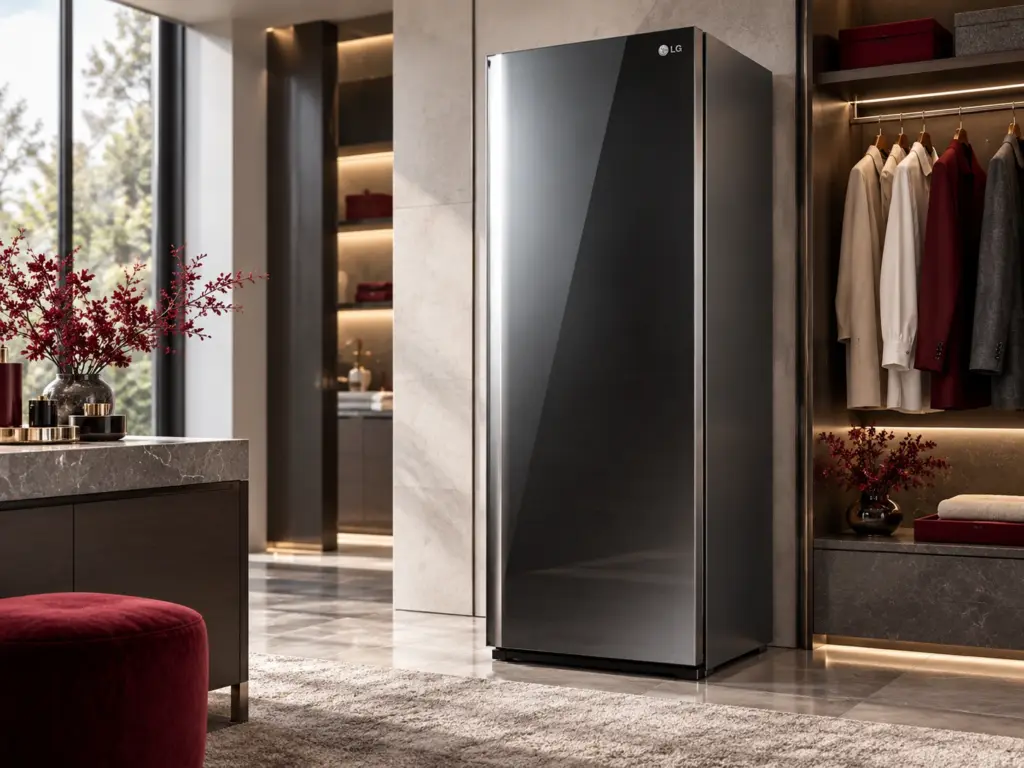
S5WBC sits in LG’s Series 5 Styler line, a step up from the Series 3 cabinets in steam output and internal sensor count — it adds a fifth thermistor position (tE5, on the evaporator-in side of the refrigeration loop that supports steam generation) that Series 3 models don’t report. The core job is unchanged from the rest of the Styler range: heat water into steam, move garments through it on a motorized rail, and condense the spent steam back into a return tank rather than venting it.
Because the Series 5 cabinet is rated to handle heavier loads such as bedding or a coat, the hanger motor sees more mechanical strain over its life than on a lighter-duty Series 3 unit, and a motor that stalls specifically under a heavy load rather than an empty rail test is a meaningfully different fault than one that won’t move at all.
Key Features
- TrueSteam generator with LG's Series 5 steam output
- Motorized hanger rail with pant-crease care
- Dual water tank system (fill and condensate return)
- Sanitary cycle rated for bedding and stuffed items
Most Common Issues on This Model
tE5 EVA-in thermistor fault on the evaporator side of the steam path
E1 steam heater sensor error
Hanger rail stalling under a heavier load such as a coat or bedding
Door seal wear after several years of steam-cycle use